The immediate answer for a busy UK reversing job

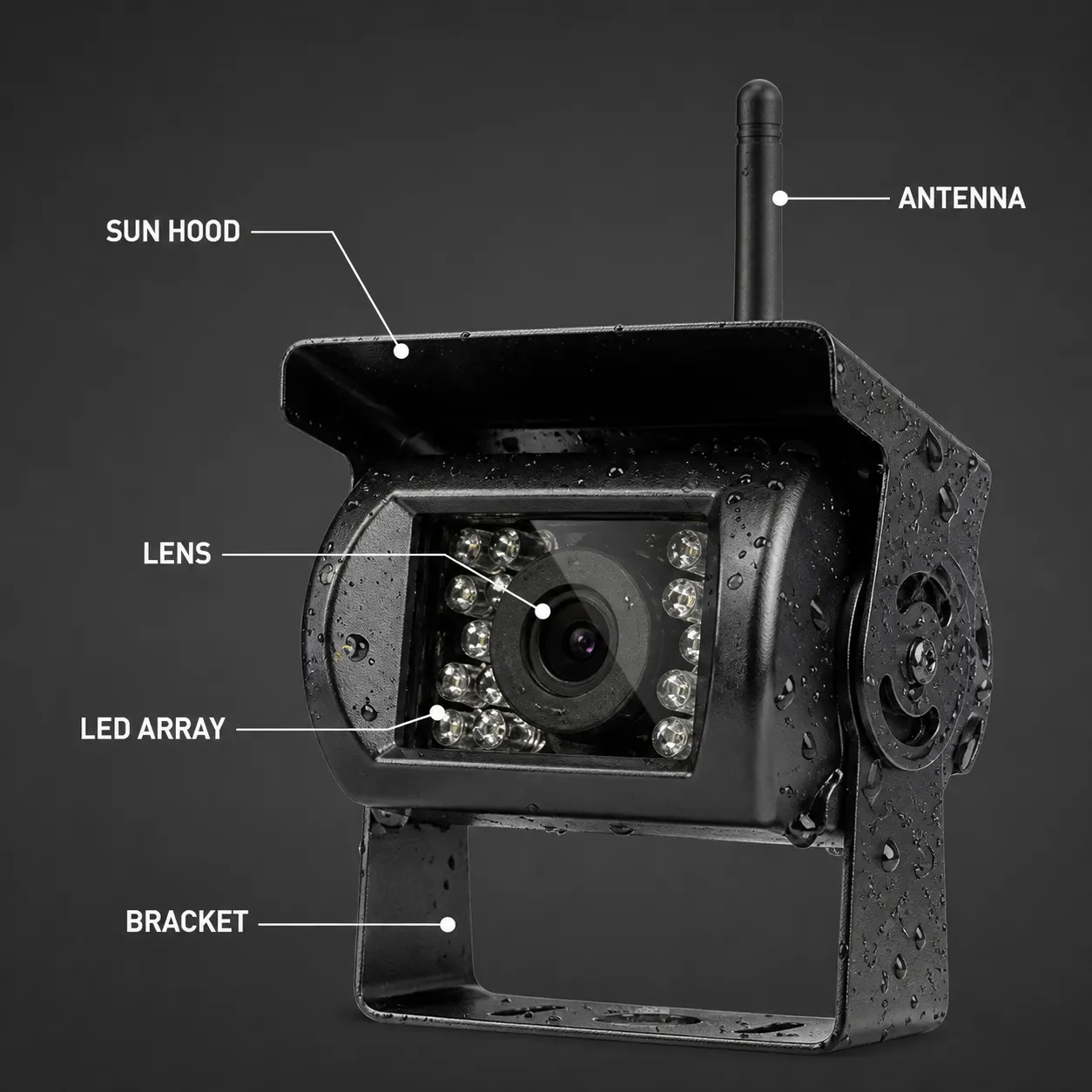
Wireless Vehicle Camera System detail view

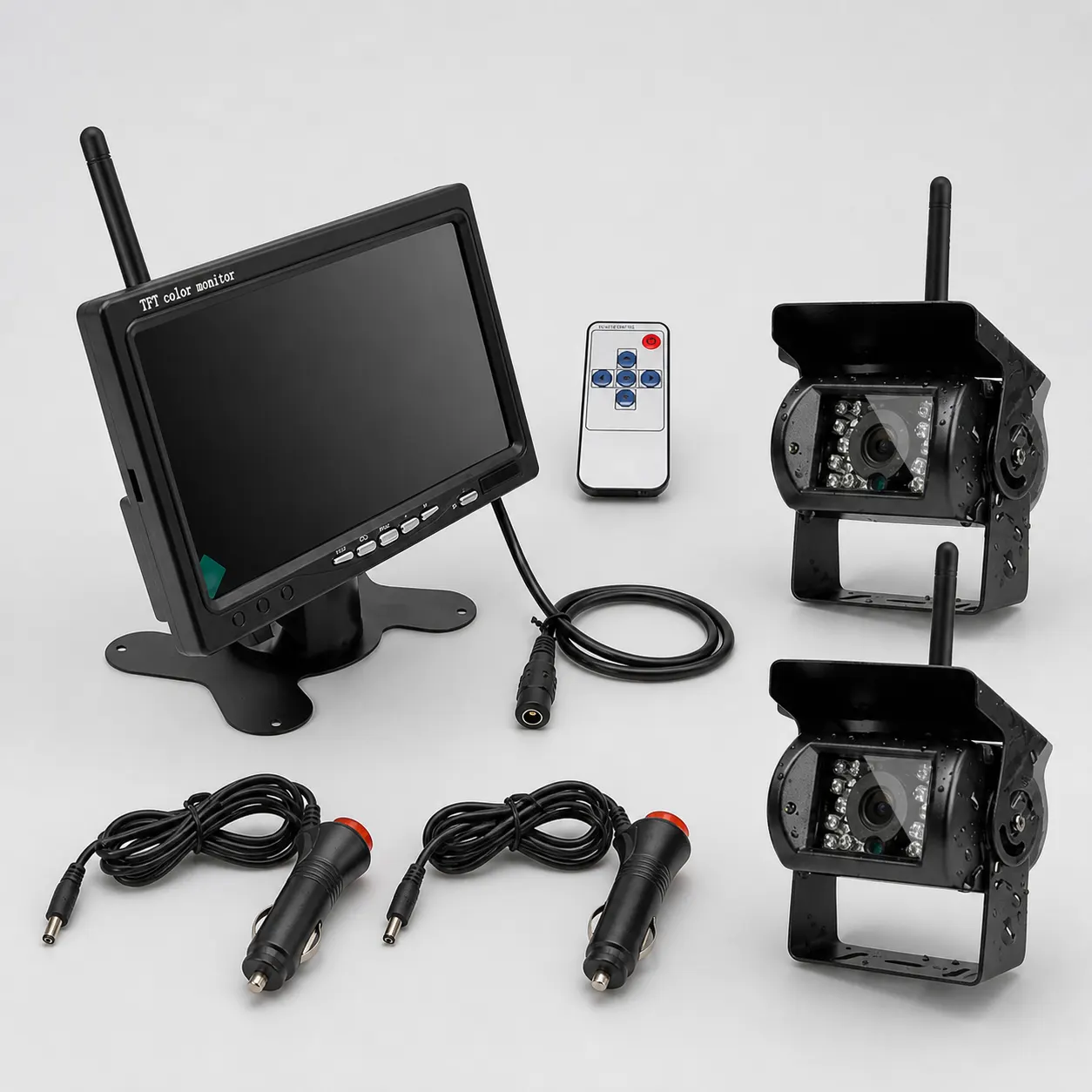
A commercial vehicle camera monitor is worth considering when the driver needs a clearer live view from the cab while reversing or making slow manoeuvres, especially around loading doors, workshop entrances, depot lanes, school sites and campsite pitches. The documented system here is a 7-inch wireless bus camera and display package with two bus-camera channels, a listed 1280 x 800 display resolution, AV input signal and two cigarette-lighter power accessories in the locked configuration. Treat it as a visibility aid, not as a replacement for mirrors, trained driving, walking the route where needed or using a banksman when the site requires one.

The practical decision is not simply whether the screen is large enough. It is whether the package matches the vehicle, the power route, the cab layout and the manoeuvre you are trying to improve. A bus reversing into a depot bay, a box van edging towards a roller shutter, and a motorhome lining up on a Cornish campsite pitch all need different camera thinking. The useful starting point is to decide what the driver must see: the rear bumper area, a wider road-behind view, a side approach, or a second angle that helps in tight turns.

The yard, depot or campsite setting that changes the choice

In a UK commercial yard, the pressure usually comes from movement happening in several directions at once. A driver may be reversing between parked vehicles, turning near a loading bay, or leaving a workshop where pedestrians, posts, bins and open doors are close to the vehicle. Mirrors still matter, but mirrors can leave awkward blind areas around the rear corners and directly behind a large body. A dedicated in-cab display can help the driver check one more useful view before committing to the manoeuvre.

For a motorhome, camper conversion or long van, the same buying logic appears in a less formal setting. The driver may have no useful through-rear view, may be trying to avoid a hedge, bike rack, low wall or neighbouring pitch, and may not want to remove trim to run a full-length cable. A wireless camera-and-monitor package can look attractive because it may reduce cab-to-rear wiring work. That does not remove the need to plan mounting, power and screen position carefully before buying.

The documented facts to check before treating it as a fit

The facts available for this selected package are specific but limited. It includes a 7-inch wireless display and two bus-camera channels. The locked configuration includes two cigarette-lighter power accessories. The listed attributes include 1280 x 800 display resolution and AV input signal. Those details are useful because they tell you the broad shape of the kit: a larger-than-small screen, two camera-channel thinking, wireless display use and accessory-socket style power support.

The same facts also show where you should avoid assumptions. The information provided does not document waterproof rating, night vision, exact wireless range, mounting hardware, cable lengths, camera dimensions, recording, parking guidelines, sensor integration, vehicle compatibility or safety certification. If any of those are must-have requirements for your fleet, workshop or motorhome, they need checking at the point of purchase rather than inferred from the product name. A good buying decision starts with what is stated, not what similar products sometimes include.

Where two camera channels can help a driver decide

Two channels can be useful when one view cannot answer the whole manoeuvring problem. On a bus or truck, one camera might be considered for a rear view while another supports a different angle, depending on the vehicle and installation plan. In a depot, that can help the driver compare what is directly behind with another area that matters during turning or reversing. The key is to choose views that answer real questions, not simply to add more pictures to the cab.

For a campervan, caravan tow setup or long van, the two-channel idea may support a bumper-focused reversing view and a broader rear-view style angle, if the vehicle layout and mounting choices allow it. The product facts do not promise a particular camera angle or field of view, so the buyer still needs to think through placement. A screen only helps if the camera sees the thing the driver is worried about: a post, pitch marker, loading dock edge, cyclist position or the back corner of the vehicle.

Cab placement, glare and power checks at the bench

Before fitting any monitor in a cab, sit in the driver’s seat and map the normal glance path. The display should be easy to glance at while manoeuvring, but it should not block the windscreen, hide mirrors, compete with existing controls or sit where glare makes it tiring to read. The documented 7-inch display size is useful for visibility, but a larger screen also needs more deliberate placement than a tiny clip-on display. A workshop bench check can save a poor cab layout.

The locked configuration includes two cigarette-lighter power accessories, which matters for buyers who want understandable power rather than dashboard rebuilding. Still, an accessory socket is not automatically the right answer in every commercial cab or conversion. Check whether the socket position creates loose leads, whether it is switched with the ignition, whether it conflicts with other equipment, and whether your vehicle policy allows that style of power. For fleet vehicles, this is as much a housekeeping and driver-distraction question as an electrical one.

Mismatches that should make a buyer pause

This package is not the right purchase if you need a documented fully wired commercial installation, a guaranteed wireless range for a very long vehicle, recorded footage, dash cam functions, parking sensor replacement, certified safety outcomes or a proven night-vision specification. None of those claims are included in the provided facts. It is also not sensible to buy purely because the phrase sounds right if your real issue is driver training, a dangerous site layout or a reversing route that should be changed.

Wireless systems can also raise practical doubts. Buyers often worry about distance, interference and signal behaviour, especially on longer motorhomes, buses or trucks. The available facts say wireless, but they do not document performance across a named vehicle length or in a specific yard environment. That means the correct question is not “will wireless always work?” but “can I accept the wireless trade-off, and have I checked the installation realities before relying on it for a working manoeuvre?”

A practical commercial vehicle camera monitor checklist

Use this checklist before treating the system as a match. First, name the vehicle and setting: depot bay, workshop yard, school loading area, campsite pitch, delivery entrance or long-van conversion. Second, name the view needed: rear bumper, road behind, rear corner, side approach or a second manoeuvring angle. Third, confirm that a 7-inch display suits the cab without blocking the driver’s forward view or mirror checks. Fourth, confirm that the two bus-camera channels are useful for your intended camera plan.

Then check the documented package facts against the physical setup. The selected package has a wireless display, two camera channels, listed 1280 x 800 resolution, AV input signal and two cigarette-lighter power accessories. Ask where the screen will sit, where each camera would be mounted, how power will be routed, whether an accessory socket is acceptable, and how the lens will be kept clean in wet or dirty conditions. If a required answer depends on an unstated specification, treat that as a question to resolve before purchase.

The grounded next step for a UK buyer

The next step is to walk the actual vehicle route with the driver, not just read the product title. Stand at the rear and corners of the vehicle in the place where the problem happens: a Birmingham workshop yard, a school transport bay, a depot loading lane, a Scottish campsite pitch or a tight customer driveway. Mark the blind area that creates hesitation or near misses. Then decide whether one rear camera view and one additional channel would genuinely help the driver make calmer, better-timed checks.

If the documented package fits that job, the commercial details are straightforward: the listed price is £113.67, VAT is included, and the policy information states Free UK Delivery, 1-3 business days processing, 2-4 business days delivery after dispatch and a 30-day return window. Those details help with planning, but the stronger decision still comes from fit. Buy only when the screen position, power path, camera-channel plan and stated facts line up with the manoeuvre you are trying to improve.