Choose a 7-inch wireless reversing camera for the actual reversing job

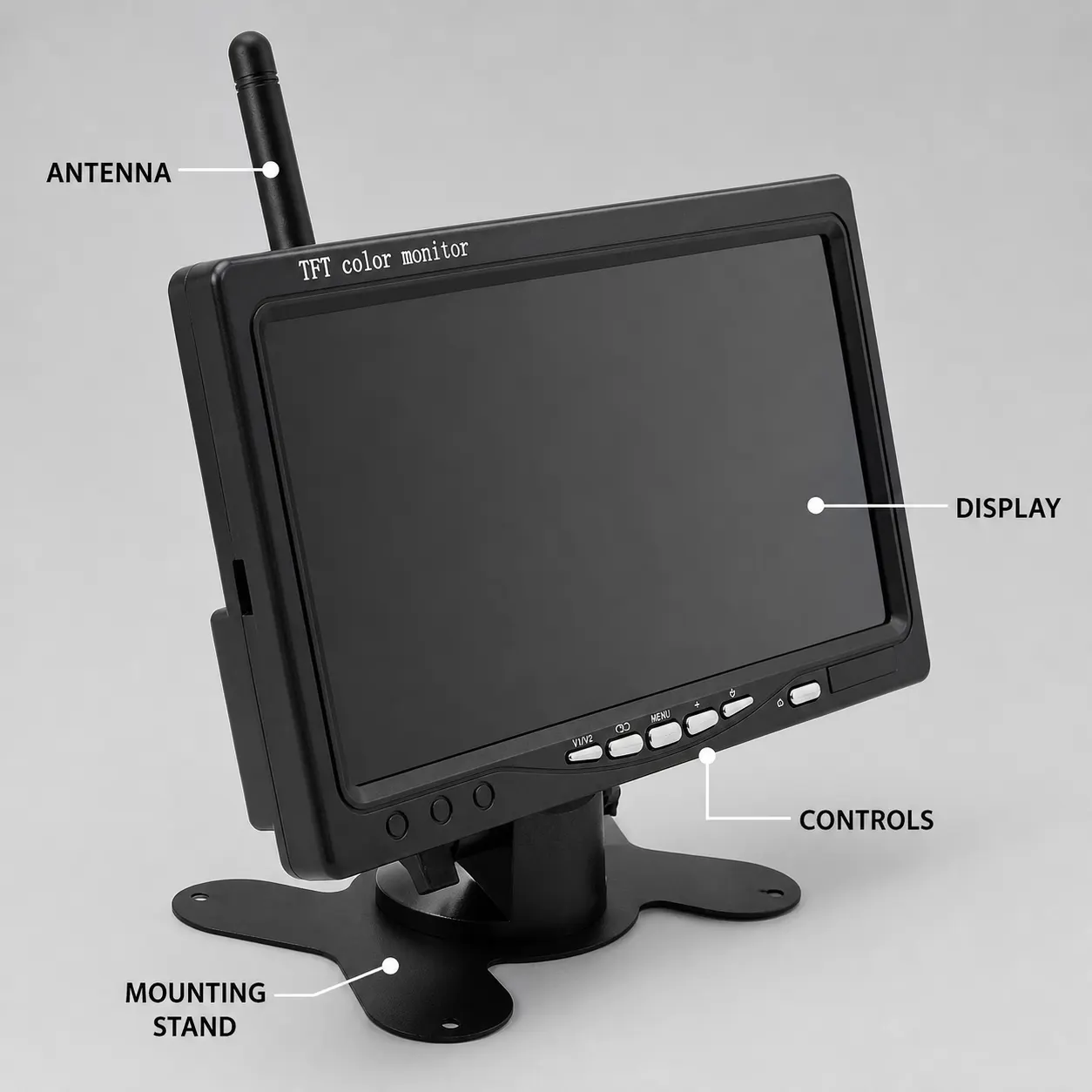
A 7 inch wireless reversing camera is worth considering when the driver needs a dedicated in-cab view while reversing or making slow manoeuvres, but it should be chosen around the vehicle and the site, not around the screen size alone. For this documented package, the public facts are narrow and useful: it includes a 7-inch wireless display, two bus-camera channels, two cigarette-lighter power accessories, a listed 1280 x 800 display resolution and AV input signal. That points towards a monitor-and-camera system for visibility support, not a replacement for mirrors, checks, training or a banksman where one is needed.
The decision is most practical when you can name the problem clearly. A depot supervisor in Leeds may want one rear-facing view for reversing towards a loading door and another angle for a side or rear approach. A motorhome owner may want a larger screen than a small clip-on monitor when edging onto a campsite pitch. In both cases, the sensible question is not whether a wireless camera sounds convenient, but whether this two-channel package fits the vehicle length, power access, monitor position and camera view the driver actually needs.
Map the camera view to a UK depot, yard or campsite manoeuvre
Start with the place where the awkward manoeuvre happens. In a Birmingham builders' merchant yard, the driver may be reversing near stacked pallets, roller shutters and other vehicles moving at low speed. In a school minibus parking area, the concern may be pedestrians passing behind the vehicle while the driver is concentrating on mirrors and steering angle. In a Cornish campsite lane, the rear of a motorhome can swing near low posts, hedges or another pitch. These settings ask for a clear reversing habit: pause, check the surroundings, glance at the monitor, use mirrors and move deliberately.
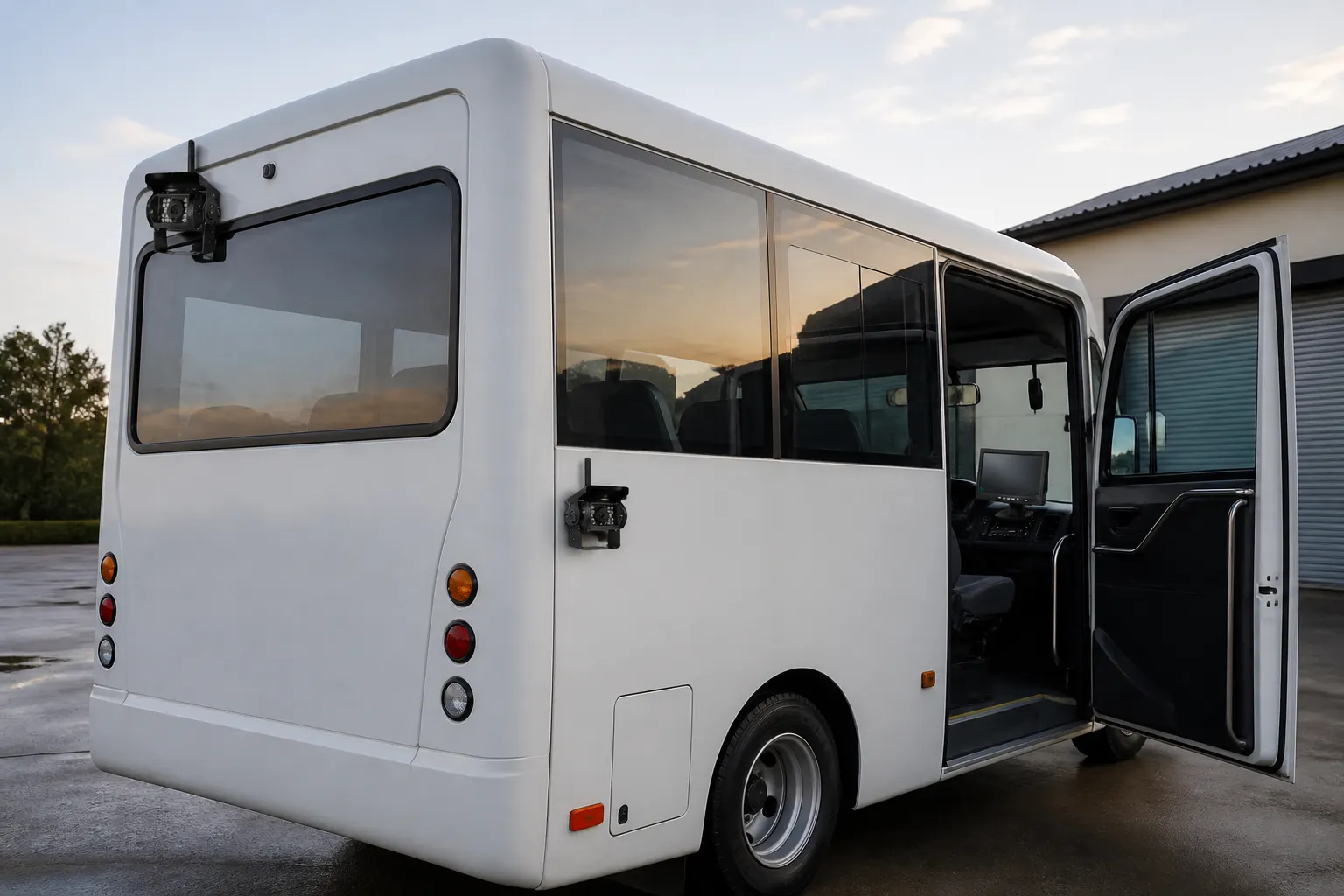
The two camera channels matter because larger vehicles often have more than one blind spot problem. One channel might be planned for a rear view, while the other could be reserved for a second camera angle if the vehicle layout supports that. The product facts do not state exact mounting hardware, camera field of view, waterproof rating, night performance or vehicle compatibility, so those details should not be assumed. Treat the screen and channels as the starting point for a visibility plan, then check the real vehicle body, rear door layout, power socket position and likely camera route before buying.
Check the documented package before treating it as a fit
The documented facts are specific enough to create a buyer checklist. The selected package includes a 7-inch wireless display and two bus-camera channels. It also includes two cigarette-lighter power accessories. The listed display resolution is 1280 x 800, and the listed input signal is AV. Those facts help you decide whether the package sounds aligned with your cab, but they do not prove that it will suit every bus, truck, van, camper conversion or motorhome. A good buyer treats the facts as boundaries as much as selling points.
Use this working checklist at the vehicle, not at a desk. Check that a 7-inch display can be positioned where the driver can glance at it without blocking the windscreen or controls. Check whether cigarette-lighter power accessories make sense for the cab sockets available, including whether the socket position would leave cables trailing across the driver area. Check that two camera channels match the intended viewing plan. Check that AV input is compatible with any existing equipment you expect to connect. Check whether any missing detail, such as mounting, camera environmental rating or low-light behaviour, needs a direct answer before purchase.
Decide whether wireless is helpful or a compromise for the vehicle
Wireless can be attractive because many buyers want to avoid running a long cable through a van body, bus interior panel, roof lining or rear door. That is especially understandable on a converted Transit, a coach with a finished cabin, or a motorhome where trim removal feels risky and time-consuming. The selected product being a wireless display and camera-channel package may reduce some cabling concerns around video signal routing, but power and mounting still have to be planned. Wireless does not remove the need for a clean installation route, a secure screen position and sensible cable management around the driver.
The main caution is that wireless should be evaluated as a trade-off, not accepted as a promise. The frozen facts do not state operating range, interference resistance or performance on a long vehicle body, so a buyer should not assume those outcomes. If the vehicle is especially long, has unusual bodywork, or works in a busy yard with many electrical devices nearby, ask for confirmation before relying on wireless for that setting. A wired commercial system may still be more appropriate where the operator wants a more controlled installation path, even if it takes more work to fit.
Avoid mismatches that make the monitor a distraction
A reversing display helps only if the driver can use it without losing awareness of the rest of the vehicle. A 7-inch screen is large enough to need careful placement in a cab, especially in a bus, HGV, long van or motorhome where the driver already has mirrors, dashboard controls and sometimes fleet equipment to manage. The monitor should not sit where it blocks forward vision or encourages the driver to stare at the screen instead of scanning mirrors and the surrounding area. The article can say this because it is safe, practical buying guidance, not a claim about the product preventing incidents.
The other mismatch is buying a two-channel camera system when the real issue is something else. If the driver needs recorded evidence, this product should not be treated as a dash cam based on the documented facts. If the buyer needs parking sensor distance alerts, those are not listed facts either. If the site requires a formal vehicle safety system with named certifications, no such certification is provided in the input. If the vehicle has no suitable auxiliary socket, or the operator will not accept cigarette-lighter-powered accessories in the cab, that objection should be resolved before purchase rather than after the box arrives.
Use a side-by-side check for fleet and motorhome buyers
For a fleet or yard buyer, the decision is usually about repeatable driver workflow. The package facts to compare are the 7-inch display, two camera channels, two cigarette-lighter power accessories, 1280 x 800 listed resolution and AV input. At a Manchester warehouse, that means asking whether the screen can sit consistently across similar cabs, whether drivers will understand which camera channel to use, and whether the power setup is acceptable for a working vehicle. The buyer should also check how the cameras will be positioned and cleaned, because a dirty or badly aimed lens can make any visibility aid less useful.
For a motorhome, caravan tow vehicle or camper conversion buyer, the decision often starts with installation anxiety. The same package may appeal because it is wireless and includes cigarette-lighter power accessories, but the checks are slightly different. Ask whether a 7-inch screen fits the dashboard without clutter, whether the intended camera view is bumper-focused, road-behind-focused or a compromise between the two, and whether the vehicle body creates any uncertainty for wireless signal. If the planned use includes reversing into pitches, narrow lanes and parking spaces, the system should support slow, careful manoeuvring rather than encourage rushed decisions.
Take the next step with the vehicle parked in the working position
The most grounded next step is to inspect the vehicle in the place where the problem happens. Park the bus, truck, van or motorhome at the Leeds depot bay, Bristol school pickup area, workshop entrance or campsite pitch that makes reversing difficult. Sit in the driver's position and choose a possible screen location. Then walk around the vehicle and mark the views you want from the two camera channels. This simple exercise often reveals whether the buyer needs one rear view, a second angle, a different monitor position, or a more involved installation than expected.
If the documented package still fits the job, the commercial facts are straightforward: the listed price is £113.67, VAT is included, and the stated UK policy includes Free UK Delivery, 1-3 business days processing, 2-4 business days delivery after dispatch and a 30-day return window. Those details can help with timing, but they should not replace the fit checks. Buy when the facts match the vehicle, the power route, the monitor position and the driver's reversing routine. Hold off when any critical point depends on a feature that has not been documented.